
When I was first assigned Elliott Erwitt as the subject of my photographer essay, I was honestly underwhelmed. The name didn’t ring any bells in my head. Upon just searching his name, I immediately recognized many of his photos and realized that some of my favorite photos are his – I just didn’t know the photographer behind those photos.
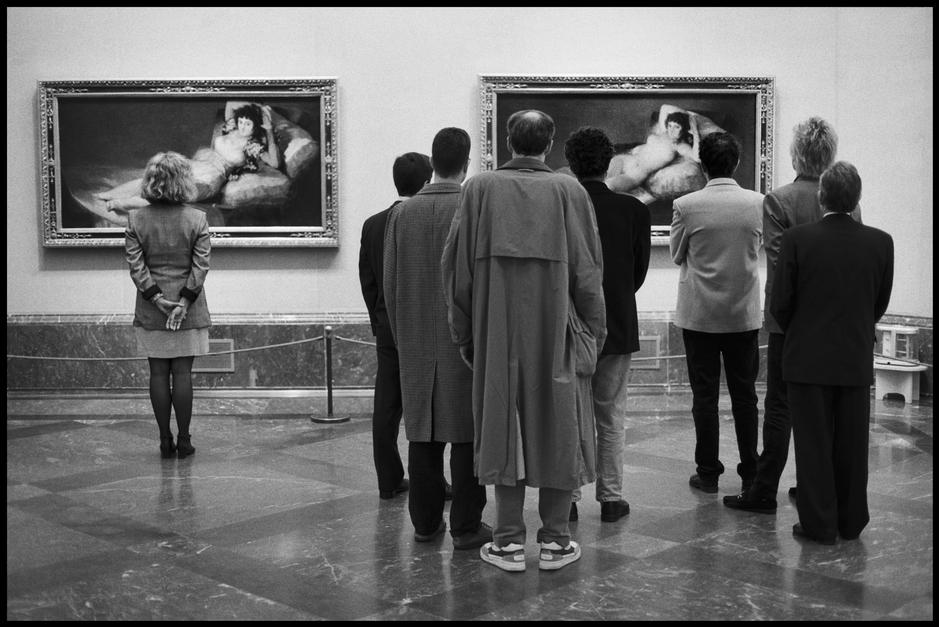
Elliott Erwitt was born in Paris, France in 1928 and moved to the United States in 1939. As a young teenager in the U.S., he worked in a commercial darkroom, producing signed prints of Hollywood stars. After high school, Erwitt spent his income on a Rolleiflex and turned his home’s laundry room into a darkroom where he developed photos that he took of friends and of weddings for money. Erwitt admitted that he was not initially enthralled by doing photography, but said that it was more exciting than other things he could have been doing. His father was a self-taught photographer, and Elliott decided that it was a “reasonable way to make a living.”
Erwitt studied photography in Los Angeles and New York City and landed multiple jobs before being drafted into the Army in 1951. These included photographing noteworthy authors, being a photographer’s assistant at the Museum of Modern Art, taking photos for the Standard Oil Company, and documenting Pittsburgh. His first nationally published photo came from this documentary project. Just after leaving the Army, he became a member of Magnum Photos and was eventually the president and fought for the photographer’s right to retain copyright over their own photos.
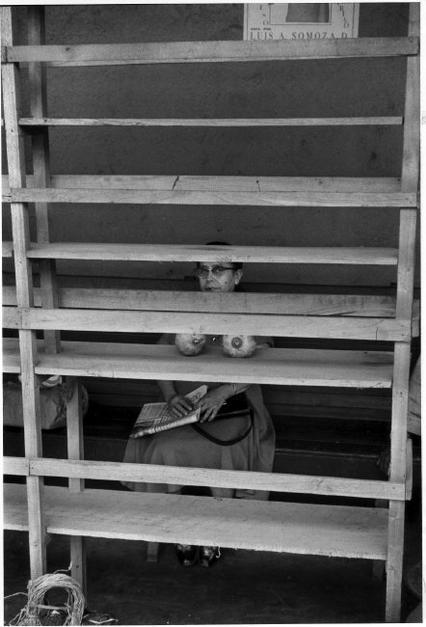
Erwitt showcased the fact that photography can be done anywhere at any time. His photos prove that there is no rhyme or reason to photographs and that anything can be captured and still hold meaning. His photos can be on the lighter side of humor, however some can be unsettling, such as one showing a young African American child holding a gun to his head with a laughable smirk on his face. Versatility is shown both in his photos and his career in which he has been a photographer for news, for corporations and industries, and for himself.
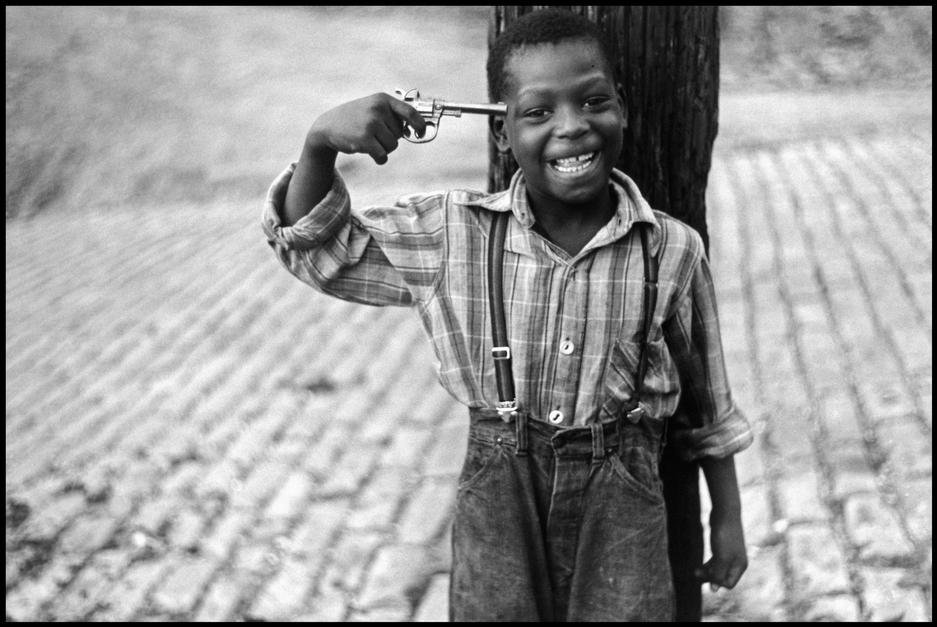
After looking into interviews of Erwitt in the 1970s, I realized that he is fairly humble about his photography. He doesn’t like to assign meaning to his photos and prefers to leave ambiguity to allow room for the viewer to interpret them as they wish. He mentioned that many of his photos are simply “captures” and weren’t staged or planned ahead of time, allowing for raw honesty from the subject(s). His interpretations of his own photos are much more subdued than those formulated by viewers. For example, when asked about the significance of shooting almost exclusively in black and white, Erwitt said that black and white was simply easier to develop in a darkroom and the end result of the print was more predictable when compared to developing a color photo.
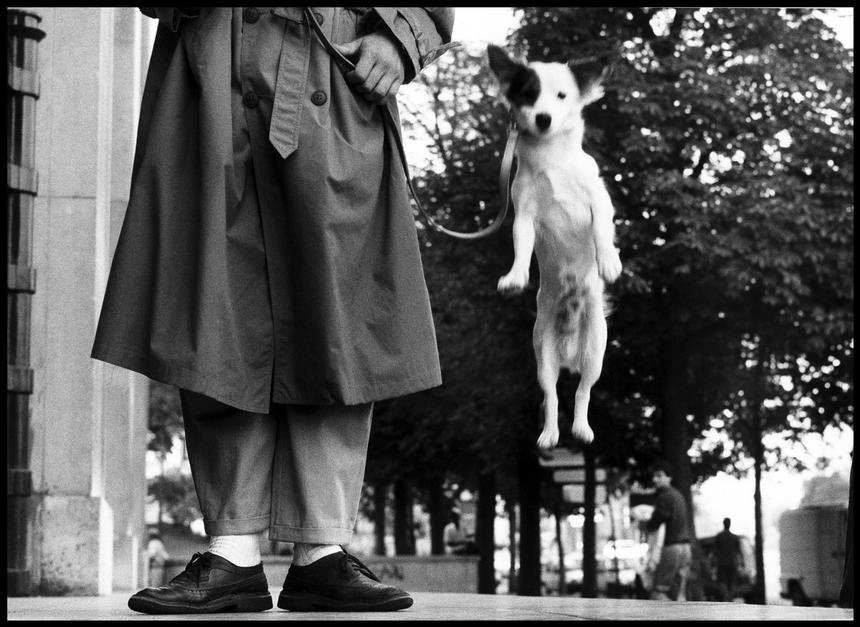
Erwitt’s collection of dog photos are among my personal favorite photos of all time. From just a photo, the viewer can gather information on the character of both the dog and its owner, and possibly how these intertwine. Often, the viewer can get the sense that the dog’s personality mirrors the owner’s personality, or maybe that the dog’s apparent character is forced upon by its owner. The whole story’s interpretation can be found in the single photo.
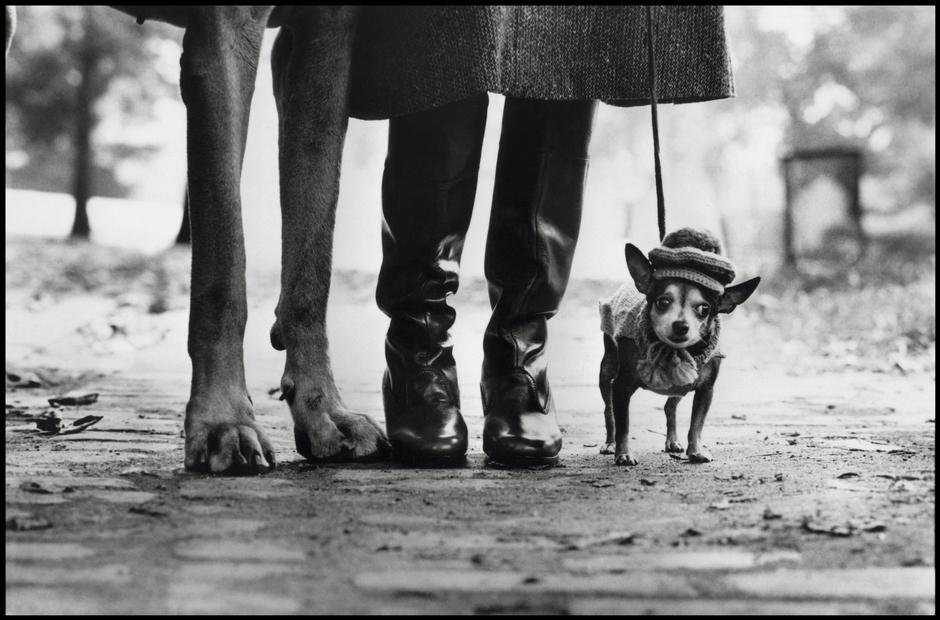
I appreciate Erwitt’s ability to visually capture witty, quirky elements of everyday life as they happen and the fact that his photos hold multitudes of meaning within such simplicity. The intimacy of his photos makes the viewer feel like they’re in that moment simply stopping to observe what is happening. His photos capture moments that some of us have possibly witnessed ourselves but carried on with our lives without giving them a second thought. Many of his photos have sparked a desire in me to capture moments of my own – to carry my camera with me everywhere I go and absorb all of the millions of moments that are happening and acquire a new eye for life.
 F.Owens Photo